Three kinds of Kingston homes end up needing a new panel
Knob & Tube Kingston sees panel upgrades arrive from three directions. Knowing which one you are matters, because it changes both the urgency and the right scope of the job.
- The 60-amp fuse box: the classic century-home service, still live in plenty of Sydenham, Portsmouth and Kingscourt basements. Insurers frequently refuse these outright: a 60-amp fuse service built for 1920s loads is a problem for insurers on its own, and it usually signals knob and tube behind the walls too. This is the version that arrives as an insurance letter with a deadline attached
- The 100-amp home adding modern loads: an EV charger, a heat pump, a hot tub. Any one of these is among the largest loads a house can carry, and a 100-amp service that was comfortable in 1995 runs out of capacity fast. No insurance letter here, just a load calculation that shows the service is too small
- The Stab-Lok owner: if your panel is a Federal Pacific / Federal Pioneer Stab-Lok, the panel is being replaced anyway because the breakers are documented to fail to trip. Since the service will be open, upgrading to 200 amps at the same time costs only the difference
What a panel upgrade actually involves
Despite the "major surgery" reputation, a service upgrade is a well-rehearsed, one-day sequence for a licensed crew:
- Utility disconnect: coordinated in advance with the utility, so the power goes off on schedule in the morning, not by surprise
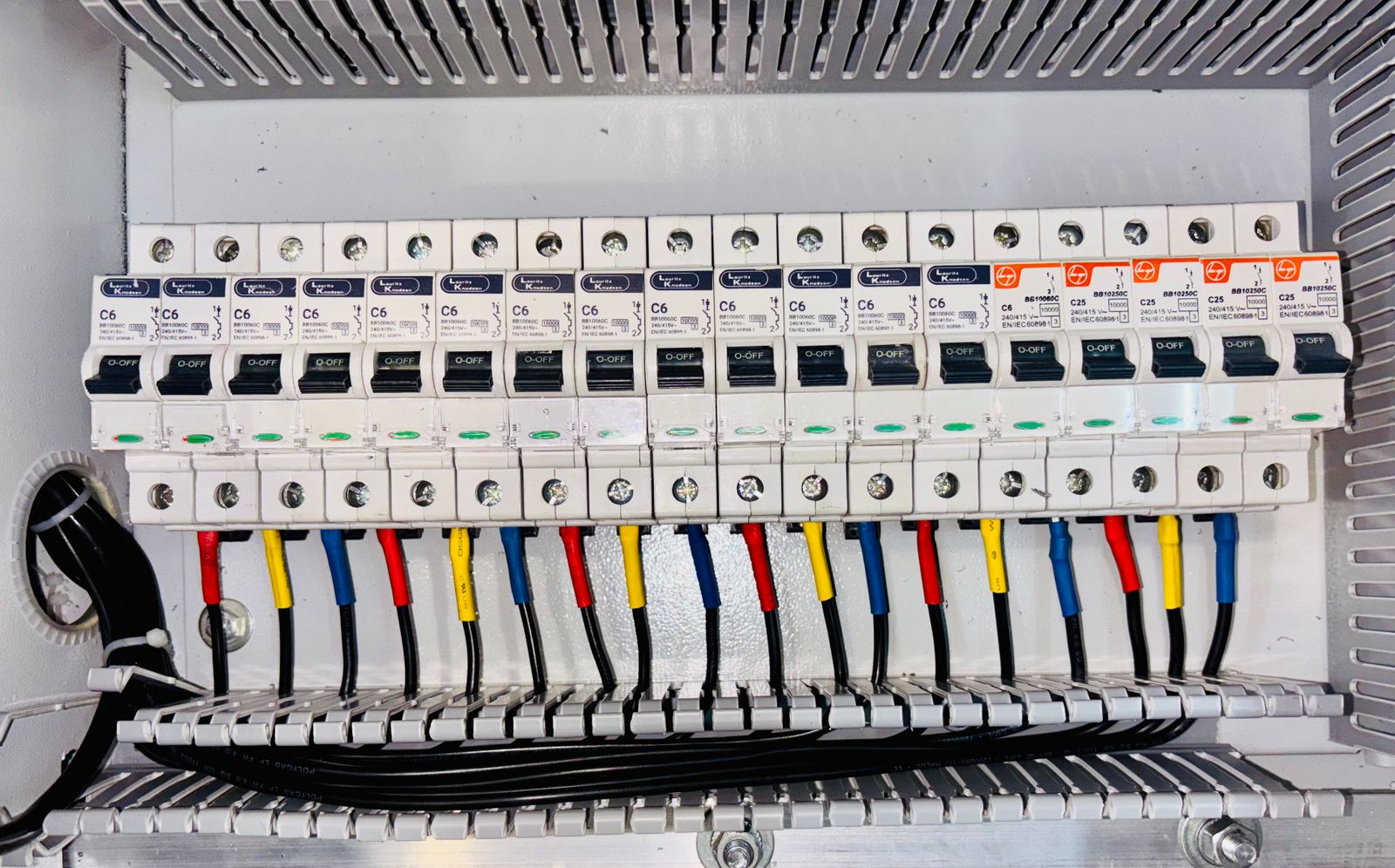
- New panel, mast and meter base: the old fuse board or breaker panel comes out; a modern 200-amp panel goes in, with the mast and meter base replaced where the service size is increasing
- Circuit transfer: every existing circuit is moved to the new panel, re-terminated and labelled properly, often for the first time since the house was built
- ESA inspection: the work runs under an ESA permit, the Electrical Safety Authority inspects it, and the utility reconnects. Ontario law requires all of this to be done by an ECRA/ESA Licensed Electrical Contractor. There are no exceptions, and no shortcut produces the certificate
Power is typically off for most of one working day. Keep the fridge doors closed during that time. The paperwork that follows, the ESA Certificate of Inspection, is the document your insurer actually reads. It is what makes the insurer remove a refusal or a 50–300% surcharge and restore standard rates, typically $500–$1,500 a year in savings.
Why century homes should almost never do the panel alone
Here's the honest advice that saves Kingston homeowners real money: if your house has knob and tube, don't upgrade the panel in isolation. Yes, it can be done: a new panel can feed old circuits. But your insurer flagged the wiring and the service, and a new 200-amp panel feeding 1920s ungrounded circuits may still leave you refused or surcharged. You would have paid for the panel and still not satisfied your insurer.
The cost comparison leads to the same conclusion. A full rewire and a panel upgrade share their most expensive components: one ESA permit, one crew mobilization, walls and ceilings that are already open for cable-fishing, one round of patching, one inspection. Sequenced as two separate projects, you pay those costs twice. Combined, a large century home falls in the $14,000–$25,000 tier: full rewire plus 200-amp panel, one certificate covering everything, and the insurance problem solved permanently. The full price table is on our cost page.
Not sure whether you need 100 or 200 amps, or whether the wiring has to be part of the job? That's exactly what the free assessment answers. A licensed partner electrician runs the load calculation, checks what's actually feeding your circuits, and delivers a written quote within 24 hours. Start with the quote form or call.